Whiteford

Colorado · Ski Lift Accidents

Falling snow is an inherent risk of skiing. Falling from a chairlift is not. When a lift injury happens, the legal rules shift in your favor — and the resort knows it. We help you use that.

You pay no fee unless we recover for you.Contingency representation for injury cases.

Free consultations — talk to us before you talk to an insurer

No fee unless we recover for you — contingency representation for injury cases

Denver based, with Whiteford's national trial platform behind every case

24/7 intake — a real conversation and a booked consultation, any hour

There's a moment on every chairlift ride when you're entirely in the operator's hands: the loading ramp, the moving carrier, the unload at the top. Most rides are uneventful. But when a chair strikes a guest, a mis-timed load drops someone, or a deramp goes wrong with a child aboard, the injuries are often serious — and the resort's incident machinery starts turning immediately.

Here's what that machinery won't tell you: lift injuries occupy different legal ground than skiing injuries. The inherent-risk protections that shield resorts on the runs don't blanket the lifts the same way. Operating a lift is closer to operating transportation, with heightened duties of care attached — and loading and unloading, where most incidents occur, is exactly where those duties are sharpest.

Whiteford Mountain West, the Colorado front door of Whiteford's national trial platform, investigates and litigates lift cases across Colorado's resorts. Here's how they work.

Why lift cases are legally different from skiing cases

Colorado law treats carrying passengers uphill differently from the sport itself. Courts have long recognized that lift operators owe passengers a high degree of care — a standard with roots in the law of common carriers — because riders surrender control completely once they're in the maze. The Ski Safety Act's inherent-risk framework, built around terrain and snow, was never designed to absorb mechanical failures, operator inattention, or mismanaged loading zones.

Regulation reflects that seriousness. The Colorado Passenger Tramway Safety Board licenses and oversees the state's lifts and gondolas, and resorts generate inspection, maintenance, and incident records around every installation. Those records — plus operator staffing and training materials — are where lift cases are won, and nearly all of them sit in the resort's or the state's hands until someone formally asks.

  • Loading and unloading zones account for the bulk of lift incidents — and are where operator duties are most demanding
  • Operator attentiveness matters: slowing the lift, stopping it promptly, and managing the ramp are core responsibilities
  • Maintenance and inspection histories for every lift are documented and discoverable
  • Children and beginner skiers are involved in a disproportionate share of loading incidents, and their claims deserve particular care

The evidence race after a lift incident

The moments after a lift injury generate a burst of records: the operator's stop log, the patrol incident report, witness statements from the maze line, sometimes camera footage of the loading area. Resorts collect all of it — for their own file. Guests are typically handed courtesy and paperwork, not copies. A preservation demand sent early is often the difference between a documented case and a swearing contest.

Waivers complicate the picture less than resorts imply. Season-pass and ticket waivers are drafted to sweep in everything, but the heightened duties attached to passenger transport are precisely the kind operators cannot simply write away. Whether a waiver actually bars a specific lift claim is a genuine legal question — one worth an hour of analysis rather than a resigned assumption.

How we handle Colorado lift injury cases

We start with a free consultation and a candid assessment of what happened: operator error, mechanical issue, loading-zone mismanagement — or an unfortunate incident with no breach behind it. If there's no case, we'll say so. If there is, we move immediately: preservation demands for lift logs, maintenance records, and footage; witness contact; and where warranted, review by qualified engineering consultants. These cases are built in mountain-county courts, and we prepare them that way from day one.

If you want an educational read before talking to anyone, our free case estimator walks through the factors that drive injury-case value. When you're ready, the consultation is free: (720) 821-3784.


Colorado law, current

What changed for Colorado injury claims in 2025

$1.5M

Higher cap on non-economic damages

For most Colorado tort cases filed on or after January 1, 2025, HB24-1472 raised the cap on non-economic damages (pain, suffering, loss of enjoyment) to $1,500,000 — adjusted for inflation every two years beginning in 2028. Economic damages such as medical bills and lost income are generally not capped.

$2.125M

Wrongful-death non-economic cap

The same law raised the non-economic cap in wrongful-death actions to $2,125,000 and, for the first time, allows siblings of the deceased to bring wrongful-death claims in certain circumstances. Medical-liability cases follow separate, phased caps.

2–3 yrs

Deadlines still apply — and vary

Colorado's filing deadlines are unforgiving: generally two years for most injury claims and three years for motor-vehicle claims, with much shorter notice windows (182 days) for claims against government entities. Exceptions exist in both directions — confirm your specific deadline with an attorney promptly.

Sources: Colorado HB24-1472 (2024); C.R.S. §§ 13-21-102.5, 13-21-203, 13-80-101 et seq., 24-10-109. This summary is general information, not legal advice; amounts are subject to statutory adjustment and case-specific exceptions.

Not another "free consultation"

The Claim Game Plan Session

30 minutes with our Colorado team. You leave with a plan — whether or not you hire us.

You pay no fee unless we recover for you.

Contingency-fee representation for injury cases — fee structure and any case costs explained clearly, in writing, before you sign anything.

Your deadline check

Exactly which Colorado filing deadlines apply to your claim type — and how much runway you actually have.

Evidence-preservation checklist

What to save, photograph, and request right now for your specific incident type, before it disappears.

A straight answer

Whether your case actually needs a lawyer. If you'd do fine on your own, we'll tell you so — for free.

The insurer-conversation briefing

What recorded statements do, what adjusters listen for, and how people accidentally shrink their own claims.

You leave with all four — whether or not you ever hire us. No pressure, no obligation, no fine print.

How it works

A clear process, from first contact to resolution

01

Tell us what happened

A free, confidential conversation — or start with the two-minute case estimator. We listen first; there is no obligation and no pressure.

02

We investigate and preserve

Evidence disappears fast: camera footage gets overwritten, vehicles get repaired, witnesses scatter. We move early to preserve what proves your case.

03

We build the full value picture

Medical costs, future care, lost income, and the human losses Colorado law now values more fully. Insurers discount what isn't documented — we document.

04

Negotiate from strength — try when needed

Most cases resolve by negotiation. When an insurer won't be reasonable, your case is backed by a national trial platform that is genuinely prepared to go to court.

Your legal team

A Denver front door. A national trial platform.

Whiteford Mountain West pairs Colorado-based leadership with the trial depth of Whiteford's full national litigation platform — so serious cases get serious resources.

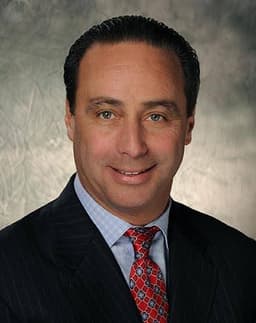
Jeffrey R. Schell, Managing Director, Whiteford Mountain West

Jeffrey R. Schell

Managing Director, Whiteford Mountain West

Denver, Colorado

Jeff Schell is a Denver-based partner at Whiteford and the Managing Director of Whiteford Mountain West. A Colorado attorney, he was named one of ColoradoBiz Magazine's 25 Most Influential Young Professionals in Colorado.

Masten Childers III, Partner · Trial Counsel, Personal Injury & Catastrophic Harm

Masten Childers III

Partner · Trial Counsel, Personal Injury & Catastrophic Harm

Whiteford national trial platform

Masten Childers III chairs Whiteford's Kentucky litigation practice and has been described as one of Kentucky's most formidable and versatile trial attorneys, with experience across state, federal, and appellate courts.

Paul M. Nussbaum, Partner · Senior Litigation Counsel

Paul M. Nussbaum

Partner · Senior Litigation Counsel

Whiteford national platform

Paul Nussbaum co-chairs Whiteford's Business Solutions, Restructuring & Financial Litigation section and co-manages the firm's New York City office, with decades of experience in high-stakes litigation involving multi-billion-dollar enterprises.

Attorneys are admitted in the jurisdictions listed in their official firm profiles. Colorado matters are led through Whiteford's Colorado-admitted attorneys; additional firm trial counsel appear in Colorado courts pro hac vice where appropriate and permitted.

Frequently asked questions

I was hurt getting on or off a chairlift. Is the resort responsible?

Possibly — loading and unloading are where operator duties are at their peak. The questions are concrete: was the lift moving at appropriate speed for conditions and riders, was the operator attentive, was the ramp maintained, and was the lift slowed or stopped promptly when trouble began? Those answers live in stop logs, staffing records, and witness accounts. An unfortunate stumble isn't automatically a case, but a mismanaged zone very well may be.

Does the Ski Safety Act's 'inherent risk' protection cover lift accidents?

Not the way it covers skiing. The inherent-risk framework is built around the dangers of the sport itself — terrain, weather, snow. Riding a lift is transportation, and Colorado law has long imposed a high degree of care on lift operators precisely because passengers surrender all control. Resorts sometimes describe lift incidents in inherent-risk language anyway. Whether that label fits your facts is exactly what an independent legal review determines.

My child was injured on a lift during a ski lesson. What should I know?

Two things. First, children in lessons are under resort supervision at loading and unloading, which adds a layer of responsibility beyond ordinary lift operation. Second, claims involving injured children carry special procedural protections and court oversight in Colorado, and they deserve careful handling rather than a quick release. Preserve everything — lesson paperwork, patrol reports, names of instructors and operators — and get legal advice before signing anything the resort offers.

What evidence matters most in a ski lift accident case?

The operator's stop and incident logs, the lift's maintenance and inspection history, staffing and training records for the crew on duty, patrol reports, witness statements from people in the maze, and any camera footage of the loading area. Nearly all of it sits with the resort or state oversight bodies, and much of it cycles out on routine schedules. A formal preservation demand sent early is the single most valuable step in these cases.

What can I recover after a Colorado lift accident, and what does it cost to find out?

Recoverable damages mirror other Colorado injury claims: medical care including projected future treatment, lost income, and non-economic damages for pain and lost quality of life — a category Colorado's 2025 damages-law changes meaningfully expanded. Finding out where you stand costs nothing: consultations are free, representation is typically on contingency, and our free case estimator offers an educational first read on the factors that drive value before you ever pick up the phone.

What could your case be worth?

The free Colorado Case Value Snapshot walks through the factors that actually drive Colorado injury case value — severity, treatment, fault, and documented losses — and returns an educational range in about two minutes. No obligation, and no pressure. Want a real answer instead? Book a free Claim Game Plan Session and leave with a plan.

Educational estimate only — not legal advice, not a case valuation, and no attorney–client relationship is created.

Related Colorado injury resources