Whiteford

Aurora · Car Accidents

Aurora's crashes happen on some of the metro's hardest corridors — and its cases land in different county courts depending on where you were hit. We handle both halves of that problem.

You pay no fee unless we recover for you.Contingency representation for injury cases.

Free consultations — talk to us before you talk to an insurer

No fee unless we recover for you — contingency representation for injury cases

Denver based, with Whiteford's national trial platform behind every case

24/7 intake — a real conversation and a booked consultation, any hour

A serious crash on East Colfax or I-225 leaves you doing several jobs at once: patient, claims manager, and family logistics coordinator, all while the other driver's insurer quietly builds its version of events. Adjusters work Aurora claims every day. You've likely never been through this. Their first offer is priced on exactly that difference.

Whiteford Mountain West is built to remove it. We're the Colorado front door of Whiteford, a firm with a national trial platform, serving Aurora from our Denver base minutes away. Local corridor knowledge, serious litigation depth, and a free consultation that starts with listening rather than paperwork.

This page covers Aurora's real crash geography, a wrinkle unique to this city — which county your case belongs to — and the early moves that protect a claim's value.

Aurora's crash corridors

I-225 is the city's spine, and its short merges and constant congestion produce rear-end and lane-change collisions all day long, with chain-reaction pileups when weather arrives. East Colfax Avenue is a different kind of dangerous: dense signals, heavy pedestrian and transit activity, and businesses with driveways every few yards, producing serious crashes at city speeds. Parker Road, Havana Street, and Mississippi Avenue round out a set of arterials that carry more conflict points than their design ever anticipated.

On the city's growing eastern edge, E-470 and the roads feeding new neighborhoods add high-speed crashes and construction-zone patterns. Each corridor generates different evidence: freeway pileups turn on vehicle data and fault sequencing among multiple drivers, while Colfax and Havana crashes are decided by intersection cameras, storefront video, and witnesses who need to be found fast.

  • I-225's merges and congestion produce constant rear-end and multi-vehicle collisions
  • East Colfax mixes signals, transit, pedestrians, and driveways into serious crashes at moderate speeds
  • Parker Road and Havana Street carry heavy commercial traffic with dense conflict points
  • E-470 and the fast-building east side add high-speed and construction-zone crash patterns

One city, multiple counties: why venue matters in Aurora

Aurora sprawls across county lines — most of the city sits in Arapahoe and Adams counties, with a slice reaching into Douglas. That's trivia until you have a lawsuit: where the crash happened and where parties live determine whether a case belongs in the Arapahoe County courts in Centennial or the Adams County courts in Brighton, each with its own judges, juries, and rhythms.

Venue choices can genuinely affect how a case is valued and tried, and insurers know the differences well. So should your lawyer. It's a small example of a larger truth: Aurora cases reward counsel who treat the city as its own legal landscape rather than a suburb handled from a Denver template.

How we approach Aurora cases

We move first on what decays: preservation letters for intersection and business camera footage, vehicle event-data downloads, witness contact while memories are fresh. Aurora's proximity to the Anschutz Medical Campus means many of the metro's most seriously injured crash victims are treated here — and serious injuries deserve a claim built around the full medical picture, including what treatment is still ahead, before anyone talks numbers.

The consultation is free and comes with an honest read — including 'handle this one yourself' when that's the truth. If you'd rather get oriented privately, our free case estimator walks through the factors that actually drive value. And because Whiteford's national trial platform stands behind every case, insurers can't price your claim on the assumption it will never see a courtroom.


Colorado law, current

What changed for Colorado injury claims in 2025

$1.5M

Higher cap on non-economic damages

For most Colorado tort cases filed on or after January 1, 2025, HB24-1472 raised the cap on non-economic damages (pain, suffering, loss of enjoyment) to $1,500,000 — adjusted for inflation every two years beginning in 2028. Economic damages such as medical bills and lost income are generally not capped.

$2.125M

Wrongful-death non-economic cap

The same law raised the non-economic cap in wrongful-death actions to $2,125,000 and, for the first time, allows siblings of the deceased to bring wrongful-death claims in certain circumstances. Medical-liability cases follow separate, phased caps.

2–3 yrs

Deadlines still apply — and vary

Colorado's filing deadlines are unforgiving: generally two years for most injury claims and three years for motor-vehicle claims, with much shorter notice windows (182 days) for claims against government entities. Exceptions exist in both directions — confirm your specific deadline with an attorney promptly.

Sources: Colorado HB24-1472 (2024); C.R.S. §§ 13-21-102.5, 13-21-203, 13-80-101 et seq., 24-10-109. This summary is general information, not legal advice; amounts are subject to statutory adjustment and case-specific exceptions.

Not another "free consultation"

The Claim Game Plan Session

30 minutes with our Colorado team. You leave with a plan — whether or not you hire us.

You pay no fee unless we recover for you.

Contingency-fee representation for injury cases — fee structure and any case costs explained clearly, in writing, before you sign anything.

Your deadline check

Exactly which Colorado filing deadlines apply to your claim type — and how much runway you actually have.

Evidence-preservation checklist

What to save, photograph, and request right now for your specific incident type, before it disappears.

A straight answer

Whether your case actually needs a lawyer. If you'd do fine on your own, we'll tell you so — for free.

The insurer-conversation briefing

What recorded statements do, what adjusters listen for, and how people accidentally shrink their own claims.

You leave with all four — whether or not you ever hire us. No pressure, no obligation, no fine print.

How it works

A clear process, from first contact to resolution

01

Tell us what happened

A free, confidential conversation — or start with the two-minute case estimator. We listen first; there is no obligation and no pressure.

02

We investigate and preserve

Evidence disappears fast: camera footage gets overwritten, vehicles get repaired, witnesses scatter. We move early to preserve what proves your case.

03

We build the full value picture

Medical costs, future care, lost income, and the human losses Colorado law now values more fully. Insurers discount what isn't documented — we document.

04

Negotiate from strength — try when needed

Most cases resolve by negotiation. When an insurer won't be reasonable, your case is backed by a national trial platform that is genuinely prepared to go to court.

Your legal team

A Denver front door. A national trial platform.

Whiteford Mountain West pairs Colorado-based leadership with the trial depth of Whiteford's full national litigation platform — so serious cases get serious resources.

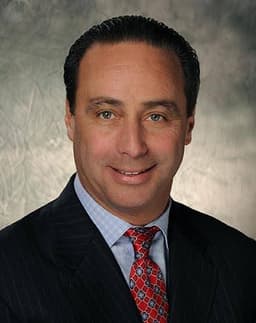
Jeffrey R. Schell, Managing Director, Whiteford Mountain West

Jeffrey R. Schell

Managing Director, Whiteford Mountain West

Denver, Colorado

Jeff Schell is a Denver-based partner at Whiteford and the Managing Director of Whiteford Mountain West. A Colorado attorney, he was named one of ColoradoBiz Magazine's 25 Most Influential Young Professionals in Colorado.

Masten Childers III, Partner · Trial Counsel, Personal Injury & Catastrophic Harm

Masten Childers III

Partner · Trial Counsel, Personal Injury & Catastrophic Harm

Whiteford national trial platform

Masten Childers III chairs Whiteford's Kentucky litigation practice and has been described as one of Kentucky's most formidable and versatile trial attorneys, with experience across state, federal, and appellate courts.

Paul M. Nussbaum, Partner · Senior Litigation Counsel

Paul M. Nussbaum

Partner · Senior Litigation Counsel

Whiteford national platform

Paul Nussbaum co-chairs Whiteford's Business Solutions, Restructuring & Financial Litigation section and co-manages the firm's New York City office, with decades of experience in high-stakes litigation involving multi-billion-dollar enterprises.

Attorneys are admitted in the jurisdictions listed in their official firm profiles. Colorado matters are led through Whiteford's Colorado-admitted attorneys; additional firm trial counsel appear in Colorado courts pro hac vice where appropriate and permitted.

Frequently asked questions

What should I do in the first week after an Aurora crash?

Get medically evaluated even if you feel mostly fine — adrenaline hides injuries, and late-appearing symptoms are common. Photograph the vehicles, scene, and your injuries; keep every document; report the crash to your own insurer. Politely decline recorded statements to the other driver's insurance company until you've had advice. If an RTD vehicle or city vehicle was involved, special government-claim rules with short notice deadlines apply, so talk to someone quickly.

Does it matter which county my Aurora crash happened in?

For your health and your insurance claim, no. For a lawsuit, yes — Aurora spans Arapahoe and Adams counties, and where the crash occurred helps determine whether a filed case lands in Centennial or Brighton. Different courthouses mean different judges, jury pools, and practical rhythms, which can influence strategy and even valuation. It's not something you need to solve yourself; it's something your lawyer should be thinking about from the first meeting.

The other driver was uninsured or drove off. Do I have options?

Often, yes. Your own policy's uninsured/underinsured motorist coverage exists for exactly this — it steps in when the at-fault driver can't pay, including many hit-and-run situations. These claims put you across the table from your own insurer, which does not automatically make them easy; carriers evaluate UM claims with the same skepticism they apply to strangers. Documentation, prompt reporting, and counsel who treat a UM claim as seriously as a lawsuit all matter.

The insurer already made me an offer. Should I take it?

Not before you understand your injuries. Early offers arrive before anyone knows whether that shoulder needs surgery or those headaches resolve — and once you sign a release, the claim is over even if your condition worsens. Have the offer evaluated against your projected treatment, lost income, and the human losses Colorado law compensates. A genuinely fair offer will still be there after a free consultation; a tactical one is counting on your hurry.

How much does an Aurora car accident lawyer cost?

Consultations are free, and representation is typically on a contingency-fee basis — fees come from the recovery rather than your pocket, explained transparently before you sign anything. That means the decision to get help doesn't depend on what's in your bank account this month. If you want a no-pressure starting point, our free case estimator gives you an educational read on your claim before you talk to anyone.

What could a Aurora case like yours be worth?

The free Colorado Case Value Snapshot walks through the factors that actually drive Colorado injury case value — severity, treatment, fault, and documented losses — and returns an educational range in about two minutes. No obligation, and no pressure. Want a real answer instead? Book a free Claim Game Plan Session and leave with a plan.

Educational estimate only — not legal advice, not a case valuation, and no attorney–client relationship is created.

Related Colorado injury resources