Whiteford

Longmont · Car Accidents

Between the Diagonal Highway's high-speed commute and Main Street's stop-and-go grind, Longmont drivers face two very different kinds of crash risk. If either one just found you, start with a free, pressure-free conversation.

You pay no fee unless we recover for you.Contingency representation for injury cases.

Free consultations — talk to us before you talk to an insurer

No fee unless we recover for you — contingency representation for injury cases

Denver based, with Whiteford's national trial platform behind every case

24/7 intake — a real conversation and a booked consultation, any hour

The Diagonal Highway makes Longmont's commute possible and its worst crashes predictable: a high-speed, largely undivided run to Boulder where a moment's drift becomes a head-on or a violent rear-end. In town, the risks change shape — Main Street carries US-287's through-traffic past signals and driveways, and the Ken Pratt and Hover corridors stack turning conflicts through the city's busiest retail stretch.

Whiteford Mountain West is the Colorado front door of Whiteford, a full-service firm with a national trial platform. Our Denver-based team represents injured people across Longmont and Boulder County, from Diagonal Highway wrecks to intersection crashes in town — with the litigation depth that makes insurers price a claim honestly.

This page walks through Longmont's crash patterns, where these cases actually get decided, and the early choices that protect what your claim is worth.

Two roads, two kinds of crashes

The Diagonal — SH-119 between Longmont and Boulder — is the case study in commuter risk: high speeds, heavy peak-hour volume, cross-traffic at rural intersections, and stretches where opposing traffic is separated by paint alone. Crashes here tend to be severe, and fault disputes tend to be sharp, because closing speeds are high and independent witnesses are often the drivers involved and no one else.

In-town crashes run on different physics but real consequences. Main Street's signal-dense US-287 corridor, the Ken Pratt Boulevard retail stretch, and the Hover Street big-box zone generate left-turn, rear-end, and pedestrian conflicts all day. Injuries at city speeds are routinely dismissed by adjusters as minor — and routinely turn out to be anything but, once soft-tissue and concussion symptoms unfold over weeks.

  • The Diagonal Highway's high closing speeds make even brief inattention catastrophic
  • Main Street carries US-287 through-traffic past dense signals, driveways, and crossings
  • Ken Pratt and Hover concentrate turning conflicts through Longmont's retail core
  • City-speed crashes produce injuries adjusters undervalue precisely because the vehicle damage looks modest

Longmont crashes, Boulder County courts

Though Longmont sits at Boulder County's eastern edge, its injury lawsuits are filed at the Boulder County Justice Center in Boulder — and insurers value Longmont claims against that county's jury pool, which takes well-documented injuries and non-economic losses seriously. That venue reality quietly works in an injured person's favor, but only when a claim is prepared credibly enough to make trial a real possibility rather than an empty threat.

The value inputs themselves are concrete: documented treatment and its future course, lost income, clarity of fault, and the human losses Colorado law compensates — which Colorado's 2025 damages-law changes meaningfully raised recoveries for. Colorado's comparative-fault rules give insurers their favorite lever, so expect an argument that you share blame, and treat it as the negotiating tactic it is.

How Whiteford handles Longmont cases

We start with a free consultation and an honest read — including telling you when a minor claim doesn't need us. When your case warrants counsel, we move immediately on evidence that decays: camera footage from businesses and intersections, vehicle data downloads, and witness accounts collected while they're fresh. Then we build the complete medical picture before anyone talks numbers, because negotiating early is how value gets left behind.

If you want to get oriented before speaking with anyone, our free case estimator offers an educational, no-pressure look at the factors that drive claim value. And because Whiteford's national trial platform stands behind every case, a Longmont file with our name on it gets priced for the Justice Center, not for a quick, quiet close.


Colorado law, current

What changed for Colorado injury claims in 2025

$1.5M

Higher cap on non-economic damages

For most Colorado tort cases filed on or after January 1, 2025, HB24-1472 raised the cap on non-economic damages (pain, suffering, loss of enjoyment) to $1,500,000 — adjusted for inflation every two years beginning in 2028. Economic damages such as medical bills and lost income are generally not capped.

$2.125M

Wrongful-death non-economic cap

The same law raised the non-economic cap in wrongful-death actions to $2,125,000 and, for the first time, allows siblings of the deceased to bring wrongful-death claims in certain circumstances. Medical-liability cases follow separate, phased caps.

2–3 yrs

Deadlines still apply — and vary

Colorado's filing deadlines are unforgiving: generally two years for most injury claims and three years for motor-vehicle claims, with much shorter notice windows (182 days) for claims against government entities. Exceptions exist in both directions — confirm your specific deadline with an attorney promptly.

Sources: Colorado HB24-1472 (2024); C.R.S. §§ 13-21-102.5, 13-21-203, 13-80-101 et seq., 24-10-109. This summary is general information, not legal advice; amounts are subject to statutory adjustment and case-specific exceptions.

Not another "free consultation"

The Claim Game Plan Session

30 minutes with our Colorado team. You leave with a plan — whether or not you hire us.

You pay no fee unless we recover for you.

Contingency-fee representation for injury cases — fee structure and any case costs explained clearly, in writing, before you sign anything.

Your deadline check

Exactly which Colorado filing deadlines apply to your claim type — and how much runway you actually have.

Evidence-preservation checklist

What to save, photograph, and request right now for your specific incident type, before it disappears.

A straight answer

Whether your case actually needs a lawyer. If you'd do fine on your own, we'll tell you so — for free.

The insurer-conversation briefing

What recorded statements do, what adjusters listen for, and how people accidentally shrink their own claims.

You leave with all four — whether or not you ever hire us. No pressure, no obligation, no fine print.

How it works

A clear process, from first contact to resolution

01

Tell us what happened

A free, confidential conversation — or start with the two-minute case estimator. We listen first; there is no obligation and no pressure.

02

We investigate and preserve

Evidence disappears fast: camera footage gets overwritten, vehicles get repaired, witnesses scatter. We move early to preserve what proves your case.

03

We build the full value picture

Medical costs, future care, lost income, and the human losses Colorado law now values more fully. Insurers discount what isn't documented — we document.

04

Negotiate from strength — try when needed

Most cases resolve by negotiation. When an insurer won't be reasonable, your case is backed by a national trial platform that is genuinely prepared to go to court.

Your legal team

A Denver front door. A national trial platform.

Whiteford Mountain West pairs Colorado-based leadership with the trial depth of Whiteford's full national litigation platform — so serious cases get serious resources.

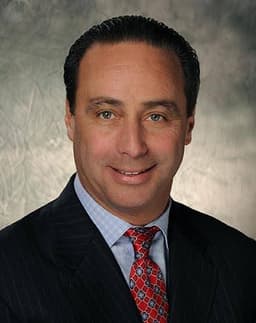
Jeffrey R. Schell, Managing Director, Whiteford Mountain West

Jeffrey R. Schell

Managing Director, Whiteford Mountain West

Denver, Colorado

Jeff Schell is a Denver-based partner at Whiteford and the Managing Director of Whiteford Mountain West. A Colorado attorney, he was named one of ColoradoBiz Magazine's 25 Most Influential Young Professionals in Colorado.

Masten Childers III, Partner · Trial Counsel, Personal Injury & Catastrophic Harm

Masten Childers III

Partner · Trial Counsel, Personal Injury & Catastrophic Harm

Whiteford national trial platform

Masten Childers III chairs Whiteford's Kentucky litigation practice and has been described as one of Kentucky's most formidable and versatile trial attorneys, with experience across state, federal, and appellate courts.

Paul M. Nussbaum, Partner · Senior Litigation Counsel

Paul M. Nussbaum

Partner · Senior Litigation Counsel

Whiteford national platform

Paul Nussbaum co-chairs Whiteford's Business Solutions, Restructuring & Financial Litigation section and co-manages the firm's New York City office, with decades of experience in high-stakes litigation involving multi-billion-dollar enterprises.

Attorneys are admitted in the jurisdictions listed in their official firm profiles. Colorado matters are led through Whiteford's Colorado-admitted attorneys; additional firm trial counsel appear in Colorado courts pro hac vice where appropriate and permitted.

Frequently asked questions

What should I do in the first week after a Longmont car accident?

See a doctor promptly even if you feel mostly fine — concussion and soft-tissue symptoms often emerge days later, and gaps in treatment get used against your claim. Photograph the vehicles, scene, and your injuries; keep every record; and report the crash to your own insurer. Decline recorded statements from the other driver's insurance company until you've had a free consultation. The first week shapes the file more than any other.

I was rear-ended on the Diagonal. Isn't fault automatic?

Usually the trailing driver bears responsibility, but 'usually' isn't 'automatically.' Insurers still contest injury severity, argue sudden stops or brake-light failures, and lean on comparative-fault theories to trim payouts. High-speed rear-end crashes also produce neck, back, and head injuries that unfold over months, which is exactly what early offers are designed to close out before you understand. Clear liability makes a case simpler — not automatically fair.

My car barely looks damaged, but I'm hurting. Do I still have a claim?

Potentially, yes. Vehicle damage is a poor proxy for human injury — modern bumpers absorb impacts that still whip necks and rattle brains. Adjusters love the low-property-damage argument precisely because it's visual and simple, but medical evidence beats photographs of bumpers. What matters is prompt evaluation, consistent treatment, and documentation connecting your symptoms to the crash. Don't let the condition of your car talk you out of the condition of your body.

Where would my Longmont case actually be decided?

Longmont injury lawsuits are filed at the Boulder County Justice Center in Boulder, and that venue matters: insurers benchmark settlement offers against what Boulder County jurors would likely do with your facts. That jury pool has a reputation for taking documented injuries and non-economic losses seriously. A claim prepared credibly for that courtroom tends to be negotiated very differently than one the insurer expects will never be filed.

How much does a Longmont car accident lawyer cost?

Our consultations are free, and crash cases are typically handled on a contingency-fee basis — fees come out of the recovery rather than your pocket, and the arrangement is explained plainly before you sign anything. If you'd prefer to explore first, our free case estimator gives you an honest, educational picture of what drives claim value, with no obligation attached. Finding out where you stand costs nothing.

What could a Longmont case like yours be worth?

The free Colorado Case Value Snapshot walks through the factors that actually drive Colorado injury case value — severity, treatment, fault, and documented losses — and returns an educational range in about two minutes. No obligation, and no pressure. Want a real answer instead? Book a free Claim Game Plan Session and leave with a plan.

Educational estimate only — not legal advice, not a case valuation, and no attorney–client relationship is created.

Related Colorado injury resources