Whiteford

Colorado · Pedestrian Accidents

A person on foot has no crumple zone. When a driver fails to yield, the injuries are severe, the fault fights are immediate, and the insurance picture is more complicated than anyone tells you.

You pay no fee unless we recover for you.Contingency representation for injury cases.

Free consultations — talk to us before you talk to an insurer

No fee unless we recover for you — contingency representation for injury cases

Denver based, with Whiteford's national trial platform behind every case

24/7 intake — a real conversation and a booked consultation, any hour

Every pedestrian crash is a physics mismatch: two tons of steel against a human body. The injuries that follow — fractures, head trauma, spinal damage — are rarely minor, and the recovery is rarely quick. What surprises most victims is what comes next: a driver's insurer that immediately questions why you were in the road, and a coverage puzzle that determines whether your medical care actually gets paid for.

Colorado's pedestrian risk isn't confined to city intersections. Rural highways — where speeds are high, shoulders narrow, and lighting nonexistent — account for a heavy share of the state's most severe pedestrian outcomes. Wherever it happened, the legal work is the same: prove the driver's failure, defeat the reflexive blame-the-pedestrian narrative, and find every policy that applies.

Whiteford Mountain West handles pedestrian cases statewide from our Denver base, with a national trial platform behind every case. This page covers how fault really works in these claims, the insurance layers most people never find, and the steps that protect your recovery.

Crosswalks, right of way, and the blame game

Colorado law gives pedestrians the right of way in crosswalks — both the painted ones and the unmarked crosswalks that legally exist at most intersections — and requires drivers to exercise due care toward pedestrians everywhere, even outside crossings. Drivers turning at intersections must yield to people lawfully crossing; a pedestrian in a crosswalk who gets hit by a turning vehicle has, in most circumstances, a strong liability case from the start.

Insurers know this, so the defense almost always shifts to the pedestrian's conduct: crossing mid-block, dark clothing, a phone in hand, stepping out 'suddenly.' Colorado's comparative-fault rules can reduce or bar recovery based on your share of blame, which makes these arguments financially serious. The countermeasures are factual: intersection camera footage, vehicle event data, headlight and sight-line analysis, and witness accounts gathered before they scatter. Even a pedestrian outside a crosswalk can recover when the driver was speeding, distracted, or simply not looking — due care doesn't end where the paint does.

The insurance layers that decide what your case is worth

Pedestrian injuries are frequently catastrophic while the at-fault driver's policy is frequently minimal — Colorado requires only modest liability coverage, and many drivers carry exactly that. The difference between a compensated recovery and an uncompensated one usually lies in coverage most victims don't know applies to them. Your own auto policy's uninsured/underinsured motorist coverage typically protects you as a pedestrian, even though no car of yours was involved. Household members' policies can sometimes be reached. Medical-payments coverage can fund early care.

Beyond that: a driver working at the time of the crash may pull an employer's commercial policy into the case; a rideshare or delivery driver's app status can open platform coverage; and a road-design or lighting failure can implicate a public entity — with the short governmental notice deadlines that follow. Mapping every layer, in the right order, is core to what we do.

  • Your own UM/UIM auto coverage usually protects you as a pedestrian — many victims never realize it
  • Household relatives' policies can sometimes provide additional coverage
  • Working drivers can bring employer or platform commercial policies into play
  • Med-pay coverage can fund treatment while liability is contested
  • Public-entity involvement triggers formal notice rules on a much shorter clock

Rural highways, night crossings, and building the serious case

Colorado's most devastating pedestrian crashes cluster on rural and high-speed corridors — highway segments through small towns, unlit crossings near bus stops, shoulders where people walk because no sidewalk exists. These cases demand reconstruction: speed analysis from vehicle data and physical evidence, visibility studies, and sometimes examination of whether the roadway itself — missing lighting, absent crossings, long gaps between safe crossing points — contributed in ways that implicate a public entity.

The damages work is equally serious, because these injuries are: long rehabilitation, permanent limitations, and the human losses that Colorado's 2025 damages-law changes now compensate more fully. We start with a free consultation and an honest assessment of fault, coverage, and value. If you want to orient yourself first, our free case estimator walks through the factors that actually drive pedestrian-case value.


Colorado law, current

What changed for Colorado injury claims in 2025

$1.5M

Higher cap on non-economic damages

For most Colorado tort cases filed on or after January 1, 2025, HB24-1472 raised the cap on non-economic damages (pain, suffering, loss of enjoyment) to $1,500,000 — adjusted for inflation every two years beginning in 2028. Economic damages such as medical bills and lost income are generally not capped.

$2.125M

Wrongful-death non-economic cap

The same law raised the non-economic cap in wrongful-death actions to $2,125,000 and, for the first time, allows siblings of the deceased to bring wrongful-death claims in certain circumstances. Medical-liability cases follow separate, phased caps.

2–3 yrs

Deadlines still apply — and vary

Colorado's filing deadlines are unforgiving: generally two years for most injury claims and three years for motor-vehicle claims, with much shorter notice windows (182 days) for claims against government entities. Exceptions exist in both directions — confirm your specific deadline with an attorney promptly.

Sources: Colorado HB24-1472 (2024); C.R.S. §§ 13-21-102.5, 13-21-203, 13-80-101 et seq., 24-10-109. This summary is general information, not legal advice; amounts are subject to statutory adjustment and case-specific exceptions.

Not another "free consultation"

The Claim Game Plan Session

30 minutes with our Colorado team. You leave with a plan — whether or not you hire us.

You pay no fee unless we recover for you.

Contingency-fee representation for injury cases — fee structure and any case costs explained clearly, in writing, before you sign anything.

Your deadline check

Exactly which Colorado filing deadlines apply to your claim type — and how much runway you actually have.

Evidence-preservation checklist

What to save, photograph, and request right now for your specific incident type, before it disappears.

A straight answer

Whether your case actually needs a lawyer. If you'd do fine on your own, we'll tell you so — for free.

The insurer-conversation briefing

What recorded statements do, what adjusters listen for, and how people accidentally shrink their own claims.

You leave with all four — whether or not you ever hire us. No pressure, no obligation, no fine print.

How it works

A clear process, from first contact to resolution

01

Tell us what happened

A free, confidential conversation — or start with the two-minute case estimator. We listen first; there is no obligation and no pressure.

02

We investigate and preserve

Evidence disappears fast: camera footage gets overwritten, vehicles get repaired, witnesses scatter. We move early to preserve what proves your case.

03

We build the full value picture

Medical costs, future care, lost income, and the human losses Colorado law now values more fully. Insurers discount what isn't documented — we document.

04

Negotiate from strength — try when needed

Most cases resolve by negotiation. When an insurer won't be reasonable, your case is backed by a national trial platform that is genuinely prepared to go to court.

Your legal team

A Denver front door. A national trial platform.

Whiteford Mountain West pairs Colorado-based leadership with the trial depth of Whiteford's full national litigation platform — so serious cases get serious resources.

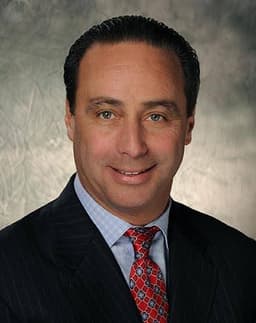
Jeffrey R. Schell, Managing Director, Whiteford Mountain West

Jeffrey R. Schell

Managing Director, Whiteford Mountain West

Denver, Colorado

Jeff Schell is a Denver-based partner at Whiteford and the Managing Director of Whiteford Mountain West. A Colorado attorney, he was named one of ColoradoBiz Magazine's 25 Most Influential Young Professionals in Colorado.

Masten Childers III, Partner · Trial Counsel, Personal Injury & Catastrophic Harm

Masten Childers III

Partner · Trial Counsel, Personal Injury & Catastrophic Harm

Whiteford national trial platform

Masten Childers III chairs Whiteford's Kentucky litigation practice and has been described as one of Kentucky's most formidable and versatile trial attorneys, with experience across state, federal, and appellate courts.

Paul M. Nussbaum, Partner · Senior Litigation Counsel

Paul M. Nussbaum

Partner · Senior Litigation Counsel

Whiteford national platform

Paul Nussbaum co-chairs Whiteford's Business Solutions, Restructuring & Financial Litigation section and co-manages the firm's New York City office, with decades of experience in high-stakes litigation involving multi-billion-dollar enterprises.

Attorneys are admitted in the jurisdictions listed in their official firm profiles. Colorado matters are led through Whiteford's Colorado-admitted attorneys; additional firm trial counsel appear in Colorado courts pro hac vice where appropriate and permitted.

Frequently asked questions

I was hit outside a crosswalk. Do I still have a case?

Quite possibly. Drivers owe pedestrians due care everywhere on the road, not just at crossings — a speeding, distracted, or impaired driver doesn't escape responsibility because of where you crossed. Colorado's comparative-fault rules mean your position may reduce your recovery, but reduction is not elimination, and insurers routinely overstate pedestrian fault to discourage claims. The facts that matter — the driver's speed, attention, and sight lines — are provable with vehicle data, physical evidence, and witnesses. Have the case evaluated before accepting the adjuster's version.

The driver who hit me barely has insurance. Where does compensation come from?

This is the defining problem in pedestrian cases, and the answer is usually layered coverage. Your own auto policy's uninsured/underinsured motorist coverage typically applies to you as a pedestrian — no vehicle of yours needs to be involved. Policies of relatives in your household can sometimes be reached. If the driver was working, an employer's or platform's commercial policy may apply. Finding and sequencing these layers correctly is technical work, and it's frequently the difference between a token settlement and a real recovery.

The police report says I was partly at fault. Is the case over?

No. A police report is an officer's initial impression, often formed without camera footage, vehicle data, or complete witness accounts — and pedestrian crashes are notorious for early narratives that favor the surviving, uninjured driver's version. Reports are also not the final word on fault in a civil claim. Thorough investigation regularly revises the picture: event-data downloads show speed, footage shows the light cycle, and sight-line analysis shows what the driver should have seen. Don't abandon a claim because of a first-impression document.

What should I do in the first week after being hit as a pedestrian?

Prioritize complete medical evaluation — head injuries and internal trauma commonly emerge after the adrenaline fades, and treatment gaps get used against you. Preserve your clothing and shoes unwashed; they're physical evidence. Write down everything you remember, identify witnesses, and photograph your injuries as they evolve. Notify your own auto insurer, since your UM/UIM coverage may apply, but decline recorded statements to the driver's insurer until you've had counsel review the situation. A free consultation early prevents the mistakes that cost the most later.

How long do I have to bring a pedestrian injury claim in Colorado?

Colorado's filing deadlines vary by claim type and can be short, and pedestrian cases hit the shorter ones often: claims involving buses, municipal vehicles, or roadway defects like missing lighting require formal notice to government entities on a dramatically compressed timeline. Evidence timelines are shorter still — intersection footage cycles quickly and vehicles get repaired. An early free consultation lets an attorney lock down every applicable deadline and get preservation demands out while the proof still exists.

What could your case be worth?

The free Colorado Case Value Snapshot walks through the factors that actually drive Colorado injury case value — severity, treatment, fault, and documented losses — and returns an educational range in about two minutes. No obligation, and no pressure. Want a real answer instead? Book a free Claim Game Plan Session and leave with a plan.

Educational estimate only — not legal advice, not a case valuation, and no attorney–client relationship is created.

Related Colorado injury resources