Whiteford

Colorado Law · Fault Rules

In Colorado, being partly at fault doesn't automatically end your claim — but insurers work hard to make you believe it does. Here's how shared fault actually works, in plain English.

You pay no fee unless we recover for you.Contingency representation for injury cases.

Free consultations — talk to us before you talk to an insurer

No fee unless we recover for you — contingency representation for injury cases

Denver based, with Whiteford's national trial platform behind every case

24/7 intake — a real conversation and a booked consultation, any hour

Almost every injured person we talk to worries about the same thing: 'What if some of this was my fault?' Maybe you were a little over the speed limit when someone ran the light. Maybe you glanced at your phone in the seconds before the crash. Insurance adjusters know this worry exists, and they lean on it — hard.

Colorado uses a modified comparative negligence system. In short: your compensation is reduced in proportion to your share of the blame, and you lose the right to recover entirely only if your share of fault reaches the point where you are as responsible as — or more responsible than — the people you're claiming against. Below that threshold, partial fault reduces a case; it does not erase one.

That threshold is exactly why fault allocation becomes the central battlefield in so many Colorado injury claims. This page explains how the rule works, the tactics adjusters use to inflate your share of blame, and what a properly built case does about it.

How Colorado's modified system actually works

In a comparative negligence state, a jury (or, in settlement talks, the negotiating parties) assigns each person involved a percentage share of fault for what happened. Your recovery is then reduced by your share. The 'modified' part is Colorado's cutoff: once your share of fault equals or exceeds the combined fault of those you're suing, recovery is barred completely. That makes small shifts in fault allocation enormously consequential — a few points of blame moved in either direction can change what a case is worth, or whether it exists at all.

Fault can also be spread across multiple defendants. In a chain-reaction crash or a case involving both a driver and a business, each party's share gets weighed. Colorado juries can even assign fault to people who aren't in the courtroom — a 'nonparty at fault' the defense designates — which is a favorite defense maneuver for diluting responsibility.

The adjuster's playbook: manufacturing your share of fault

Because the comparative-fault bar exists, shifting blame onto the injured person is the single highest-leverage move an insurance company can make. It doesn't need to prove you caused the crash — it just needs to nudge your share of fault upward until your claim shrinks or dies. This is rarely announced. It shows up quietly, in how questions are framed and which facts get emphasized.

The recorded statement is the primary tool. Innocent-sounding questions — 'How fast would you say you were going?' 'When did you first see the other car?' 'Were you in a hurry?' — are designed to generate answers that can later be characterized as admissions of inattention or speed. Vague, cooperative answers given in the fog after a crash become fault percentages in a claims file.

  • Requesting a recorded statement within days, before you've spoken to anyone on your side
  • Framing normal driving behavior — changing lanes, proceeding on green — as 'failure to avoid' the crash
  • Designating absent people as nonparties at fault to dilute their insured's share
  • Citing minor traffic citations against you as if a ticket settled the fault question, which it doesn't
  • Making a low offer 'because of your comparative fault' without ever explaining how that number was assigned

How real fault fights get won

Fault percentages aren't handed down from above — they're argued from evidence. Skid marks, vehicle damage patterns, event-data-recorder downloads, intersection camera footage, and witness statements all constrain the story a defense can credibly tell. The side that gathers this evidence early, before it disappears, usually controls the allocation debate. That is much of what an injury lawyer actually does in a contested-fault case.

If an adjuster has told you that you were partly — or mostly — to blame, treat that as an opening position, not a verdict. A free consultation with our Denver-based team costs nothing and will give you an honest read on how fault is likely to be allocated. Our free case estimator is another pressure-free way to think through how shared fault interacts with the rest of your claim before you talk to anyone.


Colorado law, current

What changed for Colorado injury claims in 2025

$1.5M

Higher cap on non-economic damages

For most Colorado tort cases filed on or after January 1, 2025, HB24-1472 raised the cap on non-economic damages (pain, suffering, loss of enjoyment) to $1,500,000 — adjusted for inflation every two years beginning in 2028. Economic damages such as medical bills and lost income are generally not capped.

$2.125M

Wrongful-death non-economic cap

The same law raised the non-economic cap in wrongful-death actions to $2,125,000 and, for the first time, allows siblings of the deceased to bring wrongful-death claims in certain circumstances. Medical-liability cases follow separate, phased caps.

2–3 yrs

Deadlines still apply — and vary

Colorado's filing deadlines are unforgiving: generally two years for most injury claims and three years for motor-vehicle claims, with much shorter notice windows (182 days) for claims against government entities. Exceptions exist in both directions — confirm your specific deadline with an attorney promptly.

Sources: Colorado HB24-1472 (2024); C.R.S. §§ 13-21-102.5, 13-21-203, 13-80-101 et seq., 24-10-109. This summary is general information, not legal advice; amounts are subject to statutory adjustment and case-specific exceptions.

Not another "free consultation"

The Claim Game Plan Session

30 minutes with our Colorado team. You leave with a plan — whether or not you hire us.

You pay no fee unless we recover for you.

Contingency-fee representation for injury cases — fee structure and any case costs explained clearly, in writing, before you sign anything.

Your deadline check

Exactly which Colorado filing deadlines apply to your claim type — and how much runway you actually have.

Evidence-preservation checklist

What to save, photograph, and request right now for your specific incident type, before it disappears.

A straight answer

Whether your case actually needs a lawyer. If you'd do fine on your own, we'll tell you so — for free.

The insurer-conversation briefing

What recorded statements do, what adjusters listen for, and how people accidentally shrink their own claims.

You leave with all four — whether or not you ever hire us. No pressure, no obligation, no fine print.

How it works

A clear process, from first contact to resolution

01

Tell us what happened

A free, confidential conversation — or start with the two-minute case estimator. We listen first; there is no obligation and no pressure.

02

We investigate and preserve

Evidence disappears fast: camera footage gets overwritten, vehicles get repaired, witnesses scatter. We move early to preserve what proves your case.

03

We build the full value picture

Medical costs, future care, lost income, and the human losses Colorado law now values more fully. Insurers discount what isn't documented — we document.

04

Negotiate from strength — try when needed

Most cases resolve by negotiation. When an insurer won't be reasonable, your case is backed by a national trial platform that is genuinely prepared to go to court.

Your legal team

A Denver front door. A national trial platform.

Whiteford Mountain West pairs Colorado-based leadership with the trial depth of Whiteford's full national litigation platform — so serious cases get serious resources.

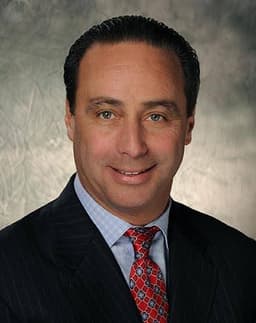
Jeffrey R. Schell, Managing Director, Whiteford Mountain West

Jeffrey R. Schell

Managing Director, Whiteford Mountain West

Denver, Colorado

Jeff Schell is a Denver-based partner at Whiteford and the Managing Director of Whiteford Mountain West. A Colorado attorney, he was named one of ColoradoBiz Magazine's 25 Most Influential Young Professionals in Colorado.

Masten Childers III, Partner · Trial Counsel, Personal Injury & Catastrophic Harm

Masten Childers III

Partner · Trial Counsel, Personal Injury & Catastrophic Harm

Whiteford national trial platform

Masten Childers III chairs Whiteford's Kentucky litigation practice and has been described as one of Kentucky's most formidable and versatile trial attorneys, with experience across state, federal, and appellate courts.

Paul M. Nussbaum, Partner · Senior Litigation Counsel

Paul M. Nussbaum

Partner · Senior Litigation Counsel

Whiteford national platform

Paul Nussbaum co-chairs Whiteford's Business Solutions, Restructuring & Financial Litigation section and co-manages the firm's New York City office, with decades of experience in high-stakes litigation involving multi-billion-dollar enterprises.

Attorneys are admitted in the jurisdictions listed in their official firm profiles. Colorado matters are led through Whiteford's Colorado-admitted attorneys; additional firm trial counsel appear in Colorado courts pro hac vice where appropriate and permitted.

Frequently asked questions

If I was partly at fault for my accident, do I still have a case in Colorado?

Usually, yes. Colorado's modified comparative negligence rule reduces your recovery in proportion to your share of fault — it only bars recovery entirely once your share reaches the point where you're as much or more to blame than the parties you're claiming against. Insurers routinely tell partially-at-fault people they have no case when the law says otherwise. Before accepting that characterization, get an independent read on how fault would realistically be allocated from the evidence.

Who decides what percentage of fault I carry?

Ultimately, a jury does — but the vast majority of claims settle, so in practice fault percentages are negotiated between your representative and the insurance company, each arguing from the evidence. That's why evidence quality matters so much: camera footage, vehicle data, crash reconstruction, and witness accounts all narrow the range of fault stories the defense can plausibly tell. Without that work, the adjuster's allocation tends to become the default.

I got a traffic ticket after the crash. Does that decide fault against me?

No. A citation is one piece of evidence, not a legal determination of civil fault, and the officer who wrote it usually didn't witness the crash. Plenty of injury claims succeed even when the injured person was ticketed, because the other side's conduct — speeding, distraction, impairment — carried more of the blame. The reverse is also true: the other driver's ticket helps you but doesn't finish the argument by itself.

The adjuster says I was 'mostly at fault.' Should I believe them?

Be skeptical. The adjuster works for the company that pays if you recover, and inflating your share of fault is the most direct way to shrink or eliminate that payment. Ask what evidence supports their allocation — often it's little more than your own recorded statement, interpreted uncharitably. An attorney can re-examine the evidence, commission reconstruction work where warranted, and push the allocation back toward what the facts support.

How does comparative fault affect a settlement, not just a trial?

Settlement value is essentially a prediction of what a jury would do, discounted for risk. If the defense can credibly argue your fault share is high, every dollar of the claim gets discounted accordingly — and if they can push you near the bar, they may offer very little at all. Strengthening the fault evidence raises the credible floor of your allocation, which raises settlement value directly. Fault work and value work are the same work.

What could your case be worth?

The free Colorado Case Value Snapshot walks through the factors that actually drive Colorado injury case value — severity, treatment, fault, and documented losses — and returns an educational range in about two minutes. No obligation, and no pressure. Want a real answer instead? Book a free Claim Game Plan Session and leave with a plan.

Educational estimate only — not legal advice, not a case valuation, and no attorney–client relationship is created.

Related Colorado injury resources