Whiteford

Colorado · Catastrophic Injury

A spinal cord injury, severe brain injury, or amputation reshapes decades — not months. The claim has to be built to the same scale, and it has to be built right the first time.

You pay no fee unless we recover for you.Contingency representation for injury cases.

Free consultations — talk to us before you talk to an insurer

No fee unless we recover for you — contingency representation for injury cases

Denver based, with Whiteford's national trial platform behind every case

24/7 intake — a real conversation and a booked consultation, any hour

A catastrophic injury divides life into before and after. The person who was hurt may never return to their old work, their old home layout, or their old independence — and the family absorbing that reality is suddenly expected to negotiate with an insurance company about what it's all worth. That is not a fair fight, and it shouldn't be attempted alone.

Whiteford Mountain West is the Colorado front door of Whiteford, a full-service firm with a national trial platform. Our Denver-based team handles the state's most serious injury cases — the ones where the outcome determines whether a family has what it needs for the next forty years, not the next four months.

This page explains what makes a case 'catastrophic' in practical legal terms, why these claims are valued so differently from ordinary injury cases, and how a team approach changes what's possible.

What makes an injury case catastrophic — legally, not just medically

In everyday language, catastrophic means severe. In a claim, it means the losses are permanent and compounding: future surgeries, attendant care, home and vehicle modifications, medical equipment replaced on a schedule for life, and a career that ends or shrinks decades early. Colorado law does not cap these economic damages — which means the real ceiling on a catastrophic case is not a statute, it's the quality of the proof assembled about the future.

That is where these cases are most often lost. An insurer will happily pay for the surgeries that already happened. The fight is over everything that hasn't happened yet — and a claim settled before that future is professionally documented leaves the largest category of loss on the table permanently.

  • Spinal cord injuries, severe traumatic brain injuries, amputations, major burns, and multi-system trauma commonly qualify
  • Future medical and care costs usually dwarf the bills already incurred
  • Lost earning capacity is measured over a working lifetime, not a recovery period
  • Family members who become caregivers carry losses the claim should account for

Building the lifetime picture: life-care planning and structured settlements

Serious catastrophic cases are built with professionals around the legal team: life-care planners who map decades of anticipated care, economists who translate that map and a lost career into present value, and treating physicians who connect every projection to the medical record. Insurers retain their own versions of these professionals, so the side with the more rigorous, better-documented lifetime picture tends to control the negotiation.

How the money arrives matters almost as much as the amount. Structured settlements can convert part of a recovery into scheduled future payments timed to future needs — a replacement wheelchair van in ten years, attendant care in retirement — and can protect eligibility for public benefits. These are decisions to make deliberately, with counsel and financial guidance, not under settlement-deadline pressure.

Why catastrophic cases demand a team, and how ours works

A catastrophic claim is really several cases running at once: liability, insurance-coverage archaeology across every available policy, medical proof, and long-range financial planning. Whiteford Mountain West pairs Denver-based counsel with Whiteford's national trial platform, so the case is prepared from day one as if it will be tried — which is precisely what makes a full-value settlement possible.

It starts with a free consultation, where we listen first and give you an honest read on the road ahead. If you want an educational starting point before speaking with anyone, our free case estimator can help you understand the factors that drive value in cases like yours.


Colorado law, current

What changed for Colorado injury claims in 2025

$1.5M

Higher cap on non-economic damages

For most Colorado tort cases filed on or after January 1, 2025, HB24-1472 raised the cap on non-economic damages (pain, suffering, loss of enjoyment) to $1,500,000 — adjusted for inflation every two years beginning in 2028. Economic damages such as medical bills and lost income are generally not capped.

$2.125M

Wrongful-death non-economic cap

The same law raised the non-economic cap in wrongful-death actions to $2,125,000 and, for the first time, allows siblings of the deceased to bring wrongful-death claims in certain circumstances. Medical-liability cases follow separate, phased caps.

2–3 yrs

Deadlines still apply — and vary

Colorado's filing deadlines are unforgiving: generally two years for most injury claims and three years for motor-vehicle claims, with much shorter notice windows (182 days) for claims against government entities. Exceptions exist in both directions — confirm your specific deadline with an attorney promptly.

Sources: Colorado HB24-1472 (2024); C.R.S. §§ 13-21-102.5, 13-21-203, 13-80-101 et seq., 24-10-109. This summary is general information, not legal advice; amounts are subject to statutory adjustment and case-specific exceptions.

Not another "free consultation"

The Claim Game Plan Session

30 minutes with our Colorado team. You leave with a plan — whether or not you hire us.

You pay no fee unless we recover for you.

Contingency-fee representation for injury cases — fee structure and any case costs explained clearly, in writing, before you sign anything.

Your deadline check

Exactly which Colorado filing deadlines apply to your claim type — and how much runway you actually have.

Evidence-preservation checklist

What to save, photograph, and request right now for your specific incident type, before it disappears.

A straight answer

Whether your case actually needs a lawyer. If you'd do fine on your own, we'll tell you so — for free.

The insurer-conversation briefing

What recorded statements do, what adjusters listen for, and how people accidentally shrink their own claims.

You leave with all four — whether or not you ever hire us. No pressure, no obligation, no fine print.

How it works

A clear process, from first contact to resolution

01

Tell us what happened

A free, confidential conversation — or start with the two-minute case estimator. We listen first; there is no obligation and no pressure.

02

We investigate and preserve

Evidence disappears fast: camera footage gets overwritten, vehicles get repaired, witnesses scatter. We move early to preserve what proves your case.

03

We build the full value picture

Medical costs, future care, lost income, and the human losses Colorado law now values more fully. Insurers discount what isn't documented — we document.

04

Negotiate from strength — try when needed

Most cases resolve by negotiation. When an insurer won't be reasonable, your case is backed by a national trial platform that is genuinely prepared to go to court.

Your legal team

A Denver front door. A national trial platform.

Whiteford Mountain West pairs Colorado-based leadership with the trial depth of Whiteford's full national litigation platform — so serious cases get serious resources.

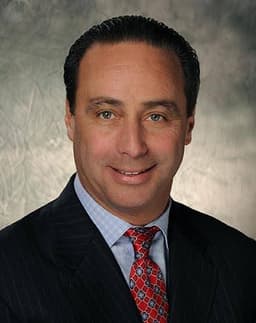
Jeffrey R. Schell, Managing Director, Whiteford Mountain West

Jeffrey R. Schell

Managing Director, Whiteford Mountain West

Denver, Colorado

Jeff Schell is a Denver-based partner at Whiteford and the Managing Director of Whiteford Mountain West. A Colorado attorney, he was named one of ColoradoBiz Magazine's 25 Most Influential Young Professionals in Colorado.

Masten Childers III, Partner · Trial Counsel, Personal Injury & Catastrophic Harm

Masten Childers III

Partner · Trial Counsel, Personal Injury & Catastrophic Harm

Whiteford national trial platform

Masten Childers III chairs Whiteford's Kentucky litigation practice and has been described as one of Kentucky's most formidable and versatile trial attorneys, with experience across state, federal, and appellate courts.

Paul M. Nussbaum, Partner · Senior Litigation Counsel

Paul M. Nussbaum

Partner · Senior Litigation Counsel

Whiteford national platform

Paul Nussbaum co-chairs Whiteford's Business Solutions, Restructuring & Financial Litigation section and co-manages the firm's New York City office, with decades of experience in high-stakes litigation involving multi-billion-dollar enterprises.

Attorneys are admitted in the jurisdictions listed in their official firm profiles. Colorado matters are led through Whiteford's Colorado-admitted attorneys; additional firm trial counsel appear in Colorado courts pro hac vice where appropriate and permitted.

Frequently asked questions

What counts as a catastrophic injury in Colorado?

There's no single legal checklist, but the practical test is permanence: injuries that will never fully heal and that change how a person works, moves, or lives. Spinal cord injuries, severe traumatic brain injuries, amputations, significant burns, and injuries requiring lifelong care are the common categories. The label matters because it changes how the claim must be built — around a lifetime of projected needs rather than a stack of existing bills.

How is a catastrophic injury case valued differently from a normal injury case?

Ordinary cases are valued mostly on treatment that already happened. Catastrophic cases are valued mostly on what hasn't happened yet: decades of future care, lost earning capacity, home modifications, and equipment. Colorado law does not cap economic damages, so the depth of documentation — life-care plans, economic analysis, physician projections — effectively sets the ceiling. Thin documentation produces a thin result, no matter how severe the injury.

Should we accept a settlement while treatment is still ongoing?

Rarely, and never without a professionally developed picture of future needs. Once a release is signed, the claim is over — even if a complication later doubles the cost of care. Insurers know families under financial pressure are tempted by early offers, and they time offers accordingly. A better sequence is to stabilize medically, complete the lifetime analysis, and negotiate from documented facts. Interim options often exist to manage bills in the meantime.

What is a structured settlement, and should we consider one?

A structured settlement converts part of a recovery into scheduled future payments, often continuing for life. It can match money to predictable needs, provide tax advantages on the payment stream, and help protect eligibility for public benefits when paired with the right planning tools. It isn't automatically right for every family — some needs call for flexible funds up front — which is why the structure decision deserves as much care as the settlement amount itself.

What does hiring a catastrophic injury lawyer cost?

Consultations at Whiteford Mountain West are free, and catastrophic injury representation is typically handled on a contingency-fee basis — fees come out of the recovery, discussed transparently before you sign anything, and the professionals who build the lifetime picture are engaged through the case rather than billed to you upfront. You can also use our free case estimator first to get oriented on what drives value before talking with anyone.

What could your case be worth?

The free Colorado Case Value Snapshot walks through the factors that actually drive Colorado injury case value — severity, treatment, fault, and documented losses — and returns an educational range in about two minutes. No obligation, and no pressure. Want a real answer instead? Book a free Claim Game Plan Session and leave with a plan.

Educational estimate only — not legal advice, not a case valuation, and no attorney–client relationship is created.

Related Colorado injury resources